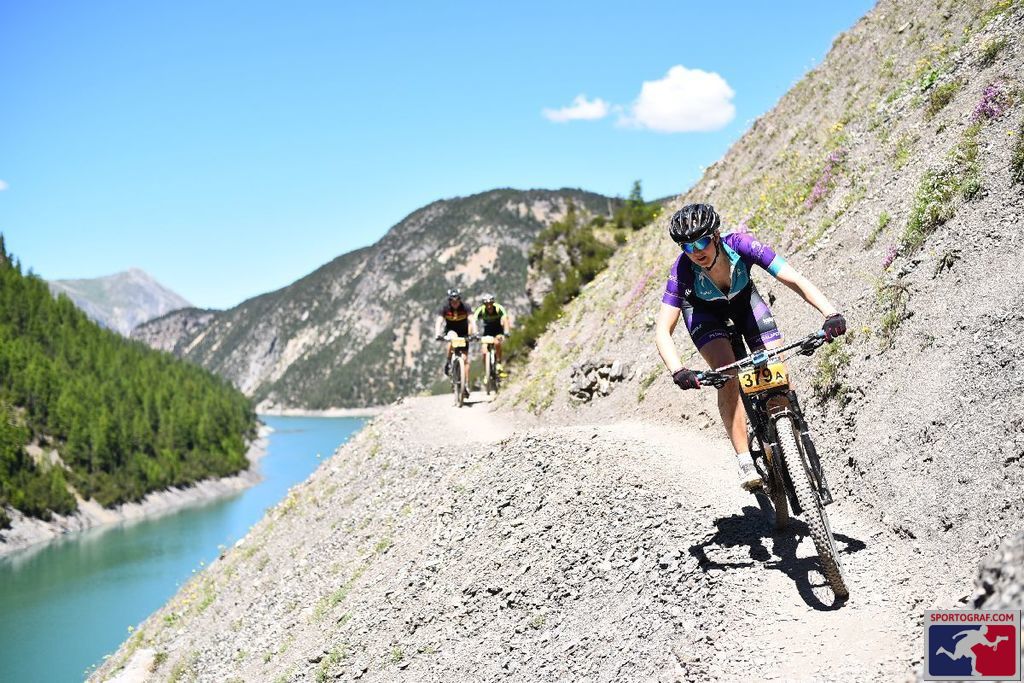
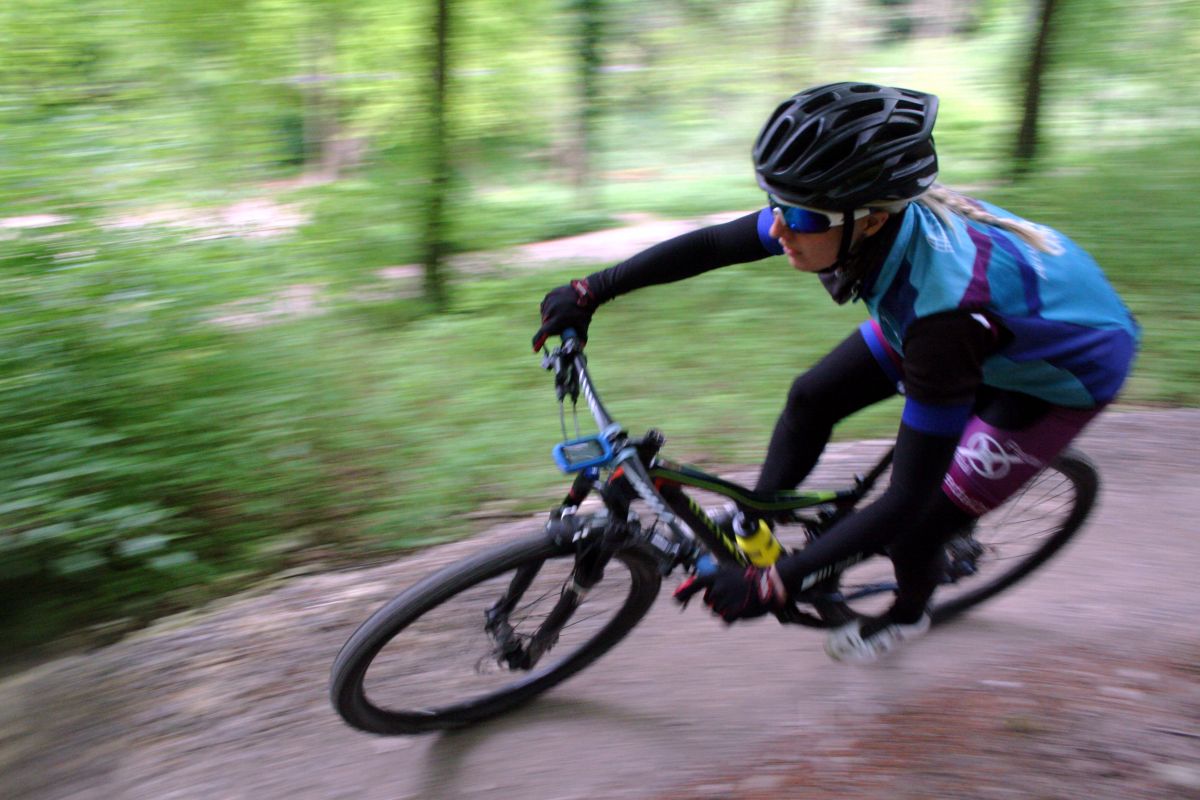
Last year I raced the Bike Trans Alp a stage race from Austria to Italy over 7 days, climbing 19,000 metres. I had never raced anything like this before. I had never ridden the distances required on multiple days let alone raced it! Climbing alpine mountains was also a new challenge, but I was excited about pushing my limits and seeing what I was capable of.
One of the key factors in getting me ‘race’ fit was hiring Mark at Velo Coaching. As a cycling coach myself I understood the basic principles of training and the sorts of sessions I should be putting together, to increase my endurance and also my ability to climb economically, however I had no real idea in how to put this together as a training plan that would allow for recovery and the adaptation in my physiology that I needed.
Mark and I worked together to look at my daily commitments like working hours, my own cycling coaching sessions and time to spend with my family. From there we plotted what type of training I could do around this and added in some important recovery time.
Having a plan made it easy for me to focus on a day at a time and not get overwhelmed with the task ahead.
I am a self-motivated person and if I want something I am prepared to make sacrifices to make it happen, having said this, having a coach there to motivate me and analyse my progress was one of the most helpful tools. Every week Mark would look at my training and we would discuss over Training Peaks what was going well and what wasn’t. As a cycling coach myself I didn’t need hand holding through my sessions I just needed the structure to work within.
The Trans Alp bike race came round in July 2016 quicker than ever and as my Dad and I drove to Austria I felt prepared, safe in the knowledge I had put in as much training as I could manage and was as ready as I could be.
It was in the Autumn after returning from the alps I had an email from someone about coaching, they weren’t sure if they were ‘good enough’ to have a coach.
My experience is that having a coach can make a difference to the small things like, for example as I have a lot going on in my work it made the task of planning and analysing my training a weight off my mind, I new Mark was there working that out so all I had to do is put on my kit and go cycling and not put too much thought into the planning stage it was all laid out for me. I think also from a confidence point of view having a coach to say it’s okay if it doesn’t go well every race or you need to work harder on hill climbing.
My thoughts are if you want to get better at something then it takes practise and patients. Getting expert advice whether you’re looking to just feel more confident when you’re out riding with your family or you are aiming for a challenge, anyone can grow as a rider and become better with the guidance of a good cycling coach.
If you would be interested in me helping you, please get in touch.
I have never given / taken anything up for lent but this year my challenge is to ride to and from work at least once a week, so far so good!
For those of you who started out triumphantly giving up chocolate or bread this week and feel like 40 days is going to be a lot to bear, why not give up a cycling bad habit instead?
Here are my top four bad habits you could have ago at breaking.
Not cleaning your bike after riding Regularly cleaning and maintaining your bike reduces the impact of standard wear and tear and can lessen the chances of mechanical failures down the line. It also gives you an opportunity to check your bike over for any issues that may stop you riding next time you head to the shed.
Going out unprepared for punctures We’ve all been guilty of this one. About as far from home as your route allows and you suddenly feel like your dragging a dead weight, that awful feeling when you realise you have no puncture repair kit or pump… Even if your going out with friends who are usually ‘prepared’ you should be able to look after yourself. This leads nicely onto my next bad habit…
Not knowing how to change an inner tube I was rather shocked to find out my Mum, who is a budding road cyclist, has no idea how to change an inner tube. It is a simple skill and a vital one if you want to be independent when your cycling. I will do a video on this soon so watch this space and let me know if there are any other skills you would like to learn?
Braking in a corner
The first rule of cornering is to scrub off all excess speed before you arrive at the corner, braking in the corner disrupts your flow and on the road can make your tyre grip less effective. My top tips to improve your technique are, scrub off all your speed before the corner, take the corner wide and head in towards the apex, when choosing your line take the straightest one possible. As you begin to exit the corner, keep looking ahead up the road to ensure you spot and anticipate any obstacles or hazards.
Thanks for reading, I hope you have enjoyed my blog post.
This week I decided to take up something for lent. I have never taken or given anything up before but for the next 40 days once a week I am going to commute to work by bike. This week was my first week and it was a great experience, on my ride home i decided to step up the pace and increase my miles, making use of the lighter evenings. The next morning the weather was ideal for cycling I was greeted by big blue skies and a warming sunrise as I pedalled the 33KM route to work.
I arrived at work feeling exhilarated and ready to face the day! Happy to have not sat in a single jam not had to wait for a single light (my route is all back roads) I had had a stress free journey to work, burnt some calories and released endorphin’s.
Training to gain strength and increase my endurance.
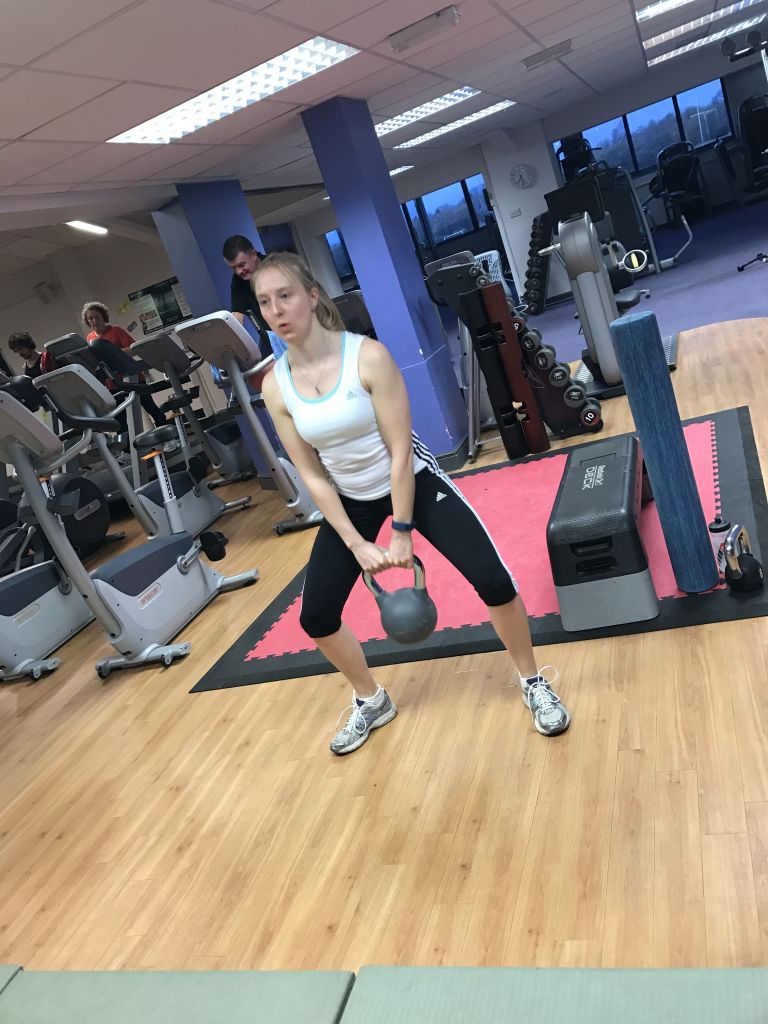
Today was week three at the gym, I started off warming up on the cross-trainer before heading over to the mats for my circuit workout planned by Steve my Personal Trainer.
My first exercise in the circuit was a kettlebell sumo squat, we started with 12kg just to warm up and to get my technique correct before moving to 20kg.
The sumo squat develops strength in all of the major muscles in the lower body. Including the kettlebell sumo squat exercise into my training is more beneficial than training each lower body muscle group independently. During the sumo squat, your glutes, quads, calves and other muscles have to work together to coordinate the movement. Squats are great because as well as strengthening a large number of muscles they help build your coordination and balance. Remember to keep your legs wide and feet at a 45degree angle, open your chest and breathe on the up.
After this squat I moved to hip thrusts (kettle bell swings) with the kettle bells, these are initiated with a powerful hip thrust using your glutes and hamstrings. This powerful movement develops the entire posterior chain of muscles while providing a great platform for building endurance and athletic conditioning. Right up my street. 🙂
So that I could focus on getting the movement correct we stuck at a weight of 12kg for these reps. it’s important to make this a hip and glute exercise and not use the momentum from your arms swinging.
After these two leg strengthening exercises I moved to work on my core using the dead bug! The dead bug exercise works your deep core muscles and pelvic floor whilst stabilising your lower spine. Building a strong core is really important as an endurance athlete as it helps me maintain good form during long distance events. As a cyclist I use my core when cycling to keep my other muscles firing correctly however you don’t build core strength on a bike which is why Pilates or core exercise in the gym/home is important.
Next it was time to work my upper body, the kettle bell row is a simple yet effective exercise for building back, arm and core muscle. To start with I used 8kg kettle bell working on sweeping my arm back in a slow sweeping action this was actually harder than using a heavier weight and doing it quickly.
After 6 sets of timed activity on each exercise it was time to move back to more core strength with jack knives and pikes using the rowing machine seat as the platform for my feet, again this makes your whole body work instead of isolating one muscle group. These were super hard and I had to do each one for one minute with a 90 second rest in between.
I am thoroughly enjoying working with a personal trainer he pushes me to lift more weight than I would on my own and also keeps the motivation going when I feel like I want to give up.
For the last three weeks I have been working on my strength in the gym with my personal trainer Steve. After a long time off the bike I needed a way to build up my power and endurance and weight training is great for this.
In most of us today our glutes are not being fired up on a regular basis due to the fact we spend a long time sitting! Even though this is a big muscle group it gets lazy when it’s not used and weight training with exercises like squats, lunges and hip thrusts are a good way to build glute strength.
What’s a glute? The gluteal muscles are a group of three muscles which make up the buttocks: the gluteus maximus, gluteus medius and gluteus minimus. The three muscles originate from the ilium and sacrum and insert on the femur. The functions of the muscles include extension, abduction, external rotation and internal rotation of the hip joint. So there pretty important!
Bulgarian split squats work the glute muscles as well as the upper leg muscles. The target muscle is the quadriceps with the gluteus maximus, soleus and adductor magnus working to assist. The hamstring, gastrocnemius, gluteus medius and gluteus minimus all act as stabilizers.
The glute bridge and the hip thrust are very effective, targeted and versatile exercises designed to activate the gluteal muscles. Being that the glutes are the largest muscle in the body (by surface area), they play an important role in hip movement and stabilization.
The first week of February signalled a change in my training, after a few weeks of building my cardio back up I made the commitment to get stronger by taking on a personal trainer once a week, to help build muscle. I felt getting the help of a PT would mean I would be pushed out of my comfort zone. I have also in the past found the free weights section in gyms rather daunting with the amount of testosterone being pumped around, I have often found myself gravitating to the machines, or lifting small weights where I feel at more at home. So picking a personal trainer who could help guide me to the exercises I should be doing to gain strength quickly, without injury and also having them there to spot me were important considerations in making this decision. One that seems to be paying off (now two weeks into my gym plan).
Last Monday the alarm rang at 5:45am and I rolled out of bed made my eggs and Matcha tea whilst feeding Luna (who was not impressed about being up so early), before heading to the gym.
I met Steve the PT at the gym and for the next hour we went through resistance exercises that would make my whole body stronger. As I have mainly concentrated on building my leg strength for years my upper body and back have become weaker so I was keen to work on this area and improve my strength. Steve took me through exercises like tricep dips, press ups and squats with kettle bells to help build my all round strength.
Most of the exercises I am doing use free weights and resistance I think resistance training works especially well for me as I get bored sitting on machines. Resistance training tends to be more dynamic and interesting.
After my PT session there was time for a protein shake, shower and quick change before driving to the office.
I had said to Lauren we would run at lunch, expecting my body to cope with strength training after weeks and weeks off was rather silly on my behalf!
None the less Lauren and I went for a walk/run and I actually felt okay once I was moving, once we had stopped and I was back at my desk it was clear that the running gym combo was maybe too much too soon and three days later I was still suffering with DOMS!
DOMS can occur anywhere in the body that has recently been exposed to unfamiliar or intense physical activity.
After working my whole body in an unfamiliar way there was not a part of me that didn’t ache in some way.
Top DOMS alleviation tips:
Drinking plenty of water
Eating the correct food, protein shake after my workout and then a meal of good carbs, protein and vegetables.
Resting in front of the tele watching Scandal with your legs in the air (insert favourite TV program)
So much for a big training week… This really highlighted to me the importance of resting and eating for recovery. I have been keen to start building up my miles on the bike again in preparation for racing but having decided to also focus on building strength by using the gym I need to work on a better plan of how my training week will be brought together.
I spoke with Steve and we have adjusted my PT sessions slightly as it’s no good going to the gym if it means I can’t do any bike work during the week.
To make sure I recover well from my PT session I have changed my cardio sessions around and will try a short run on Tuesdays, walking Wednesdays and sprint sessions, a long tempo ride Thursday a rest Friday and then long low intensity weekend ride.
THIS WEBSITE USES COOKIES
We use cookies to personalise content and ads, to provide social media features and to analyse our traffic. We also share information about your use of our site with our social media, advertising and analytics partners who may combine it with other information that you’ve provided to them or that they’ve collected from your use of their services. You can review our Privacy and Cookie Policies and at any time change or withdraw your consent from the Cookie Declaration on our website.