by | Mar 8, 2015 | Training
I have been training hard for Battle of The Beach since returning from my snowboarding holiday. It took a couple of weeks to get back up to my original training pattern because of having a slight cold.
During the week I have been working on skills and thought I would share with you some tips and techniques.
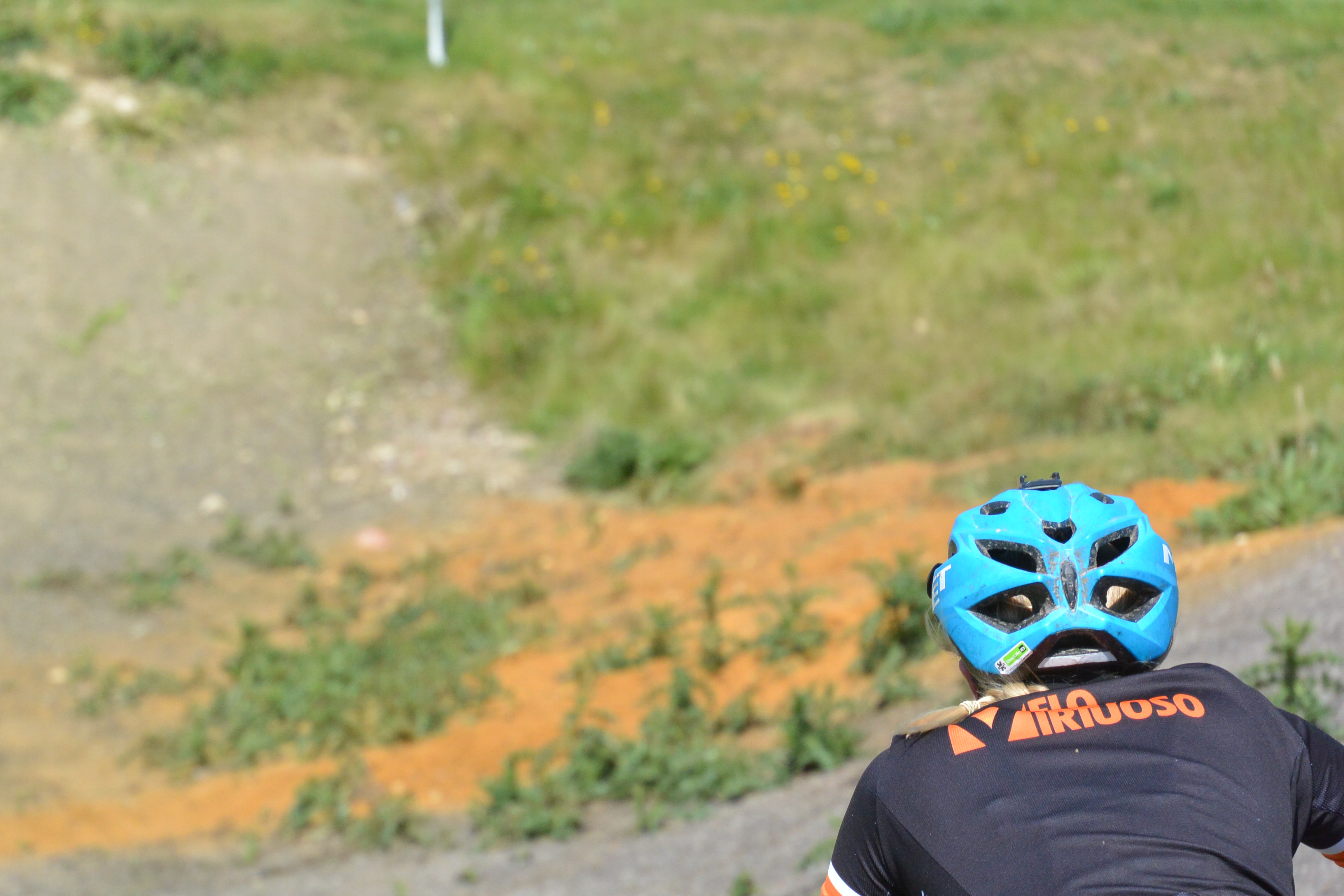
Cornering
Cornering is an essential skill for any type of riding, but especially when you’re off road and finding your way through trees having a good cornering technique which means you’re not losing speed and flow by breaking in the wrong place or not looking far enough ahead.

This session takes around an hour and you should include a good 10/15 min warm up and 10 min cool down.
Find a quiet field or off road area where you can lay out some markers for two corners, or if you are lucky enough to live near some good single track where there is a couple of flat corners you can use without getting in anyone’s way.
Then set up your phone in a good position to video yourself taking the corners, to start with work on nailing the technique, then speed the process up timing yourself at getting round a short loop or just through the corners themselves.
Write down the times and conditions so over the weeks you can see how you are improving.
Then work on the technique;
• Ready position as you approach the corner
• Enter at a controllable speed so you don’t break in the corner
• Look towards the exit as you approach the apex
• Weight positioned over the centre of the bike, slightly forward of the saddle
• Inside leg up, outside leg down and apply pressure into the outside leg
• Angle your hips into the bend
• Apply pressure to the inside handle bar and lean the bike into the corner
Great video found on the British Cycling website.
by | Jan 28, 2015 | Training
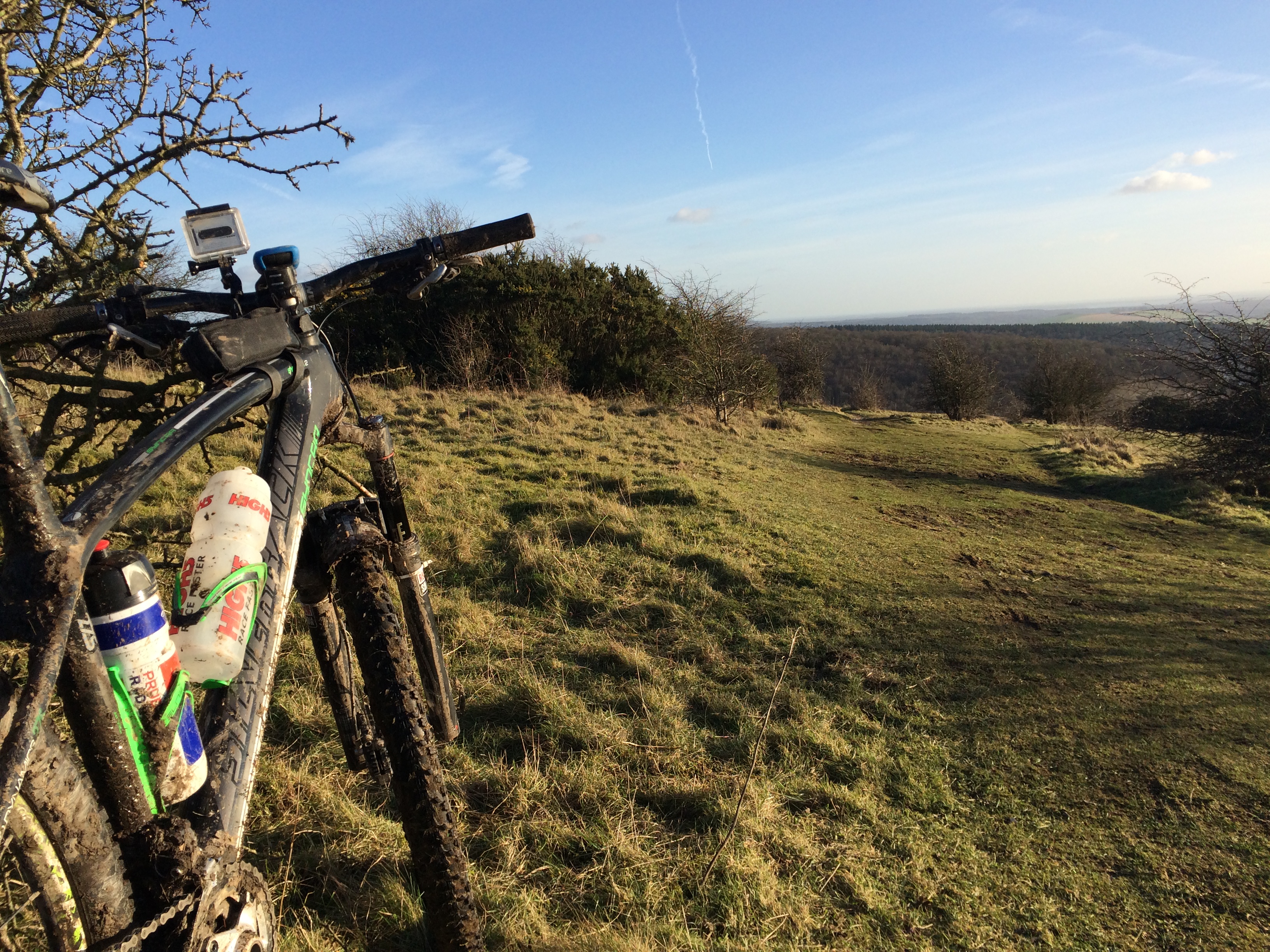
Over the weekend I went on two long endurance rides, on Saturday I had planned a long four hour off road ride along the South Downs Way (SDW). The ride started well working my way through QE Park which is one of my favourite places to train. I crossed the a3 and continued up Butser Hill which is a hard climb on and off road. The view from the top was spectacular across the Meon Valley.

I then followed the SDW along towards Old Winchester Hill, the weather was brilliant but days of rain made it sticky going, when I reached the top of Old Winchester Hill a walker said I wouldn’t go down there it’s very muddy I doubt you will be able to break! I thanked the man and thought how bad can it be!
It turned out breaking was the least of my problems! The cloying mud stuck to my tyres like glue until there was such a thick layer my wheels wouldn’t turn! A new game presented itself, how much mud can I allow to clog up my wheel before I have to find a good stick to pull it all off. Progress was painfully slow and all I kept thinking about was getting to the road. I could hear a road ahead but on asking walkers found out it was around 3 miles to Exton and the escape from the mud! I continued for a while push, get stuck, pull all the mud off. By this time my over-shoes kept coming off my toes because to the build-up of mud and my feet were soaked. Thinking of the positives I was out in the fresh air in the sun what better way to spend a Saturday. I soon met a mountain biker coming in the opposite direction his destination was QE Park, where I had come from all those hours ago! By now I had been riding for 3 hours and riding and walking for around 10 minutes. He said it would be worth carrying my bike the rest of the way, which I decided to do and although my beautiful carbon Silverback is usually as light as a feather today, clogged with mud and unrecognisable it was far from it!

Carrying went okay but in bike shoes with very little grip it was slow going through the group.
I finally made a rideable bridleway and headed towards to sound of the road slowly but surely I made it!
By this time I had been going for nearly four hours had very little water left and had only one decent snack left so I had an energy gel, something I would usually only have in a race. It gave me a little boost which got me to my destination of Corhampton to look at a house Martyn and I are interested in. I then turned round and rode back where I had come from up through a pretty village called Warnford, turning right back towards Old Winchester Hill the climb was slow and with little energy every pedal stroke was tough. I finally made it to the top and decided to follow the road as far as I could to miss out any more climbing! I met my outgoing path in a small village and re-joined the SDW. I was relieved to be going down instead of up Butser Hill, I rode slowly passed people and then let my brakes off and let the bike go it was exhilarating the speed and feeling of freedom as I made very quick work of the hill that took a good 10 minutes to climb!
I crossed the A3 and made my way up the blue section of QE Park towards Buriton and home.
Sunday was a new challenge, a three hour tempo ride these are designed to increase my aerobic capacity and my vo2 max, to do this you have to work in a heart rate zone mine is between 148 – 158. I set out spinning to warm up, my legs were a little tired but generally good, I felt in good form as I made my way out of Petersfield towards South Harting. I had a new nutrition plan, to eat a jelly baby or two every 25 mins this worked well for the first hour and a half I felt good and was able to keep pushing a good pace.
About 20 minutes later I hit the proverbial brick wall, after battling with my legs telling me to slow down and my head telling me to stop I turned for home. I reached into my bag and pulled out my last ration, a USN protein and energy bar, these are great and worked well on Ride London, the problem was I was already too fatigued to recover so instead gritted my teeth and pushed on, every pedal stroke seemed like hard work, but slowly and steadily I won the battle and turned my final corner towards home.
Part of my lack of energy was potentially the after burn from Saturdays ride and depleted glycogen in my muscles which I hadn’t managed to completely replace on Saturday before my Sunday ride. This is a factor to think about and plan for in the future.
Sometime you have to listen to your body and know when to call it a day. Looking at the bigger picture if you’re too wiped out to then train for a couple of days, then you’re actually not progressing in your training. Being a time crunched athlete fitting in a job and business I am aware my recovery and training time is a delicate balance between too much and too little.
Our bodies adapt and improve when we are at rest, being a bit of a training nut it’s important to remember that while you might feel great and strong when your lungs are bursting and your racing up hill, that your body actually adapts to this strain when you’re sitting at work or on the sofa.
So for all those just one more mile and then I’ll go home people out there, have a look at your training and recovery load and take a check on how your fitness is changing.
by | Jan 25, 2015 | Training
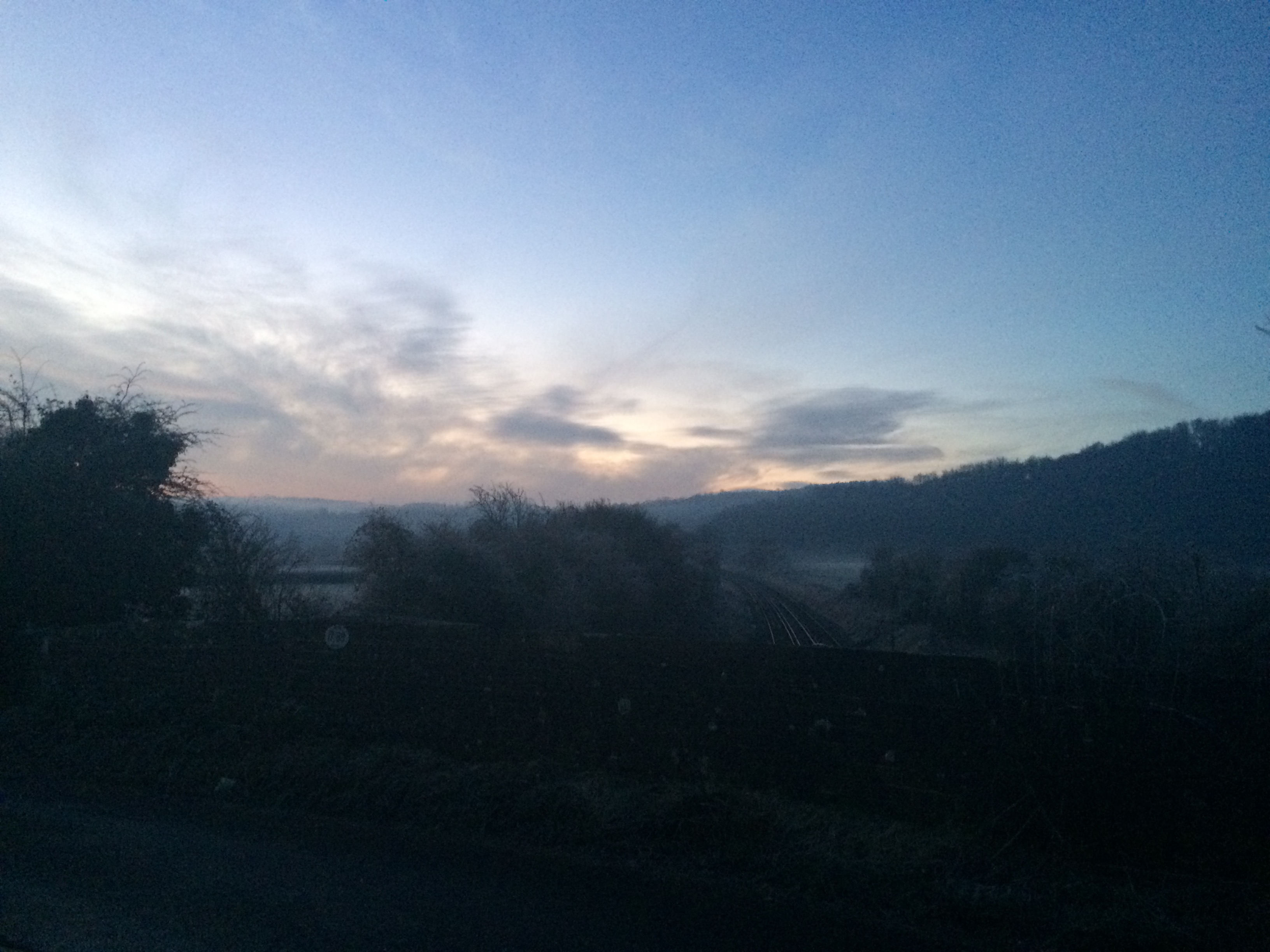
This morning I ventured out in -6, I new it must be cold because my water froze in the bottle!
Here are some pictures of the sun rise over Petersfield.


by | Jan 20, 2015 | Training
As it’s the start of the New Year I have heard a lot of friends new years resolutions, to join the gym, stop drinking or eating sugar. My new years resolution is to gather as much experience in endurance racing as I can and establish my first year riding in the Elite category.
I am under no illusion that this is going to be tough not only in moving up to the sharp end of racing but also taking on a new longer distance and essentially having to adapt my physiology to be able to cope with the increase in distance. Where cross country racing is short and sharp with races not being over an hour and 30 mins, I have predominately for most races been anaerobic for most of the time (heart rate above 170bpm). Endurance racing is going to require me to work aerobically to be able to take on food in order to fuel the long distance.
With this in mind I have been scouring the Internet for events and came across the UK’s only beach race. Looking at the photos and reading about the event I decided this would be a great first long distance race for me to tackle. I also managed to convince Martyn that he should race too for moral support, he reluctantly agreed.
So a little bit of information on Battle of The Beach. It is 25 miles (40km) of beach, singletrack and double track and the race loops three times around this 7-mile course.

Taking place in Pembrey Country Park, South Wales on March 21 – 22nd . There is a weekend of racing including roller racing on the Saturday, a youth race and many categories in the main event on Sunday afternoon (including my open female race). The trophies for first, second and third look awesome and there is also prize money for the top three in the open male and female races, bonus!
I have done a little research on the results from last year where the winning female had impressive lap times of around 31 minutes making her travelling speed 14 mph, on the beach! That is as far as I’m concerned, super speedy and has motivated me to increase my speed training.
To increase my ‘spinning’ capability Mark my coach has set me the task of high cadence sessions working up to a cadence of 130 rpm! At the moment I can’t reach 130 rpm, but with practice I am getting closer! The idea of these sessions is to get me used to a higher cadence, which will eventually allow my heart rate to drop so I can work aerobically for longer during endurance events.
So far my training for this season is going really well I clocked up 475 miles in 37 hours in December.
I am going to keep a diary of my training and my progression towards 14mph off road consistently which is my goal for March and Battle of the Beach.

by | Dec 10, 2014 | Training
After the racing season is over and winter sets in there is a good period of time when cyclists can look to analyse and improve on last years results by putting in some hard endurance miles.
It is important you give yourself a few weeks rest between racing and training to recuperate, then start building up your base. Think of your base as the foundation of your fitness. Building a strong base during the off-season will enable your body to cope better and improve when your pre-season high intensity workouts start.
To maintain and develop your aerobic capacity over the winter you need to put in some long miles. Once or twice a week you should be aiming to get in some long rides, depending on your goals will depend on the length of these sessions, but to improve your aerobic fitness they should be 2 hours plus. They should be done at a pace, which requires little concentration on the training, (for once you will be able to take in the scenery of your rides).
My five tips to winter training success are;
Set a goal and get a training plan. Going from the structure race season to an off-season can leave you feeling a bit, lost! To keep on track set your 2015 goal in October and work your training out for the off and pre season aiming for your goal or goals.
Make sure you have good tyres on your bike whether its road or mountain bike your going to need more tread and potentially a lower tyre pressure to add to your grip.
Wear enough layers and don’t forget your head, feet and hands. Good gloves and over shoes are a must especially for long sessions, lost feeling in your toes and fingers will lead to cutting your training short.
Mix it up, the winter is a good time for cyclists to do some strength training to build strong core muscles.
Don’t forget to drink. When riding in the cold, it’s easy to forget to drink but, with warm winter kit on, you could still be losing significant fluids through sweat and compromising your performance.